
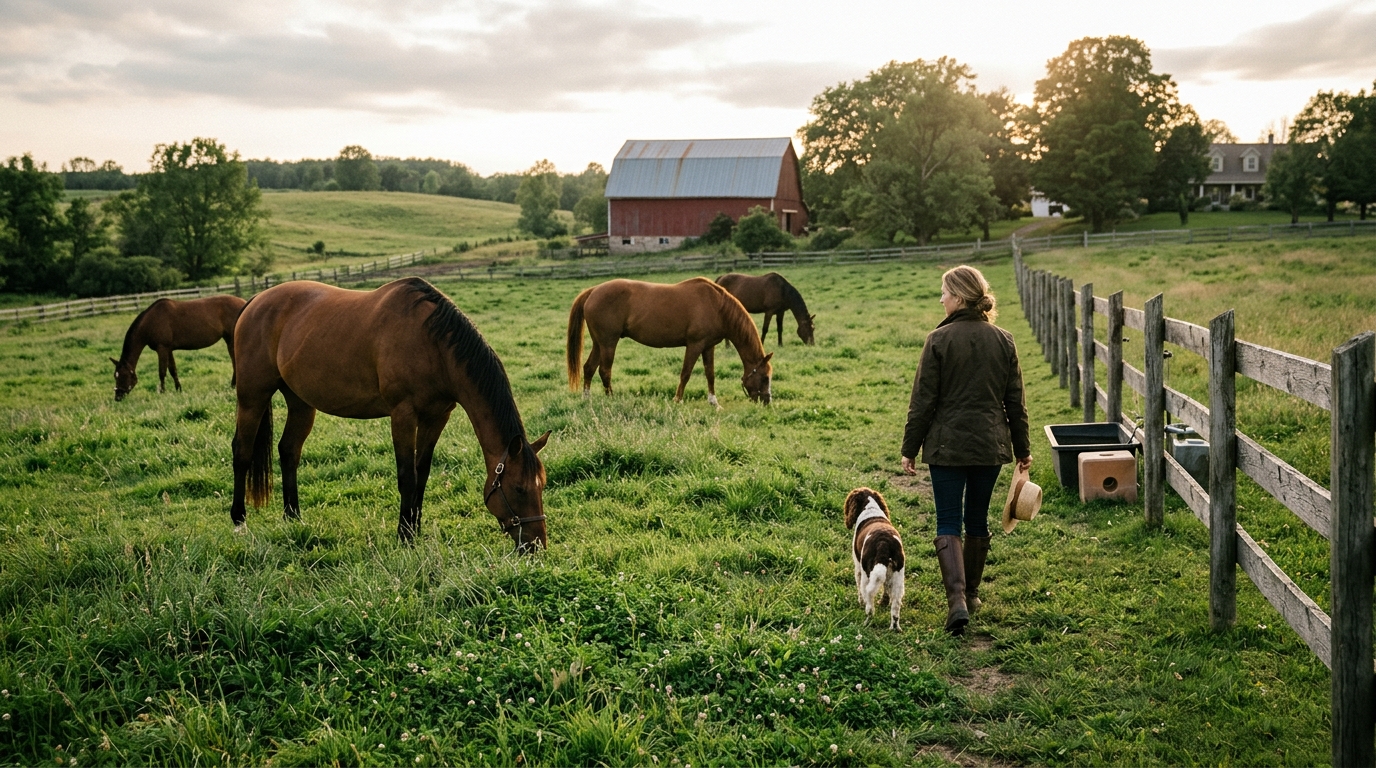
Effective pasture management is the systematic approach to maintaining the health, productivity, and safety of grazing land for equines. It involves balancing forage availability with soil health to ensure long-term sustainability. Horse Sport provides Canadian equestrians with expert guidance on these critical farm management topics.
1. Implement Rotational Grazing Systems
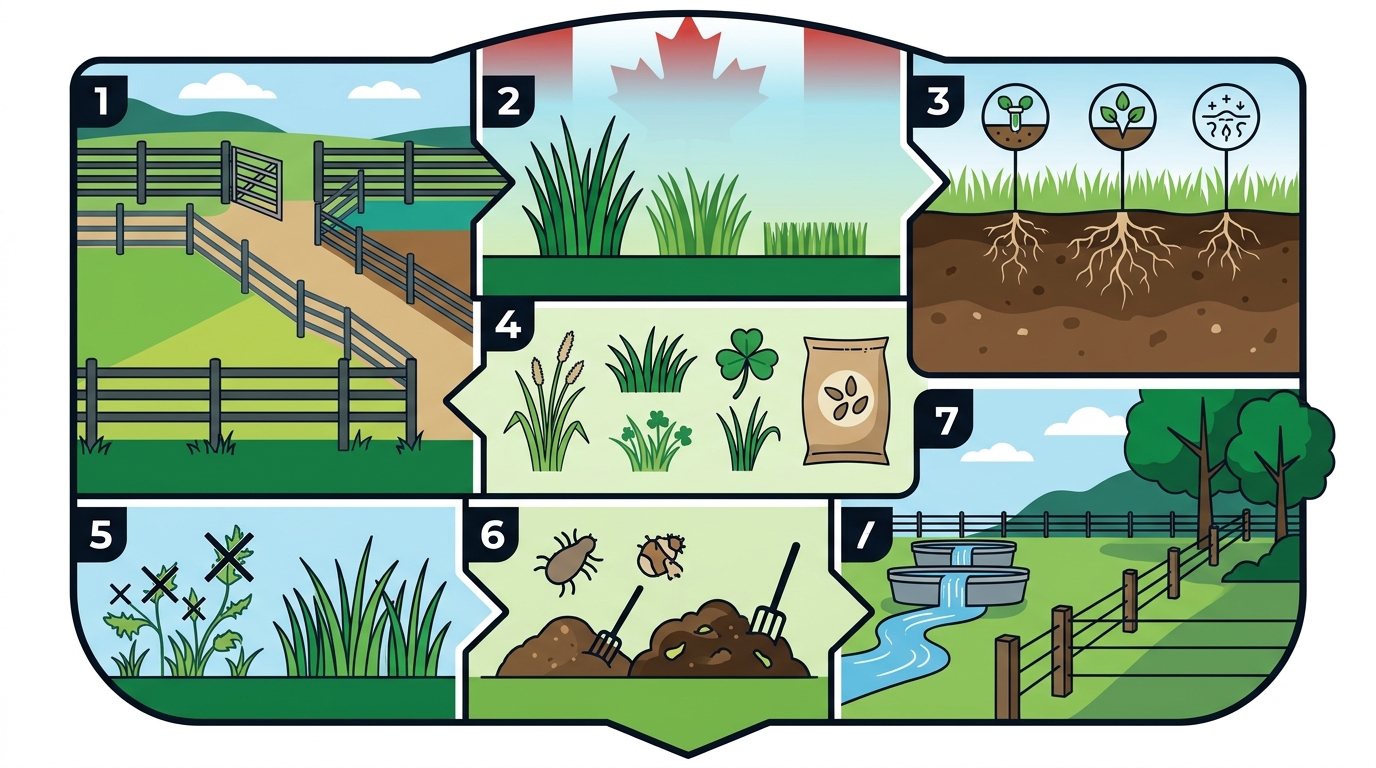
Rotational grazing is a method where horses are moved between separate paddocks to allow forage recovery. This practice prevents overgrazing and allows grasses to reach their full growth potential. By dividing pastures into smaller paddocks, you can control the amount of forage consumed at any given time. This method significantly improves the nutritional density of the grass and reduces parasite loads.
2. Conduct Regular Soil Testing
Soil testing is the process of analyzing soil composition to determine nutrient levels and pH balance. Understanding your soil's baseline is essential for accurate fertilization. Tests should be conducted every two to three years to monitor changes in nitrogen, phosphorus, and potassium levels. This data helps you apply only the necessary amendments, saving money and preventing environmental runoff.
3. Manage Parasite Loads Strategically
Parasite management is the set of practices used to control internal and external parasites in grazing horses. Instead of deworming on a fixed calendar, use fecal egg counts to guide treatment. This targeted approach reduces the risk of developing resistant parasite populations. Rotating pastures and removing manure promptly are also critical components of a healthy parasite control program.
4. Maintain Proper Fencing Integrity
Fencing integrity is the condition of the perimeter and internal barriers that safely contain horses within designated areas. Regular inspections are necessary to identify and repair weak spots, loose wires, or damaged posts. Safe fencing prevents escapes and injuries, which are common risks in poorly maintained pastures. Consider using electric offset fencing for internal paddocks to reduce the risk of entanglement.
5. Monitor and Adjust Forage Quality
6. Ensure Adequate Water Access
Water access is the availability of clean, potable water sources within the grazing area. Horses require significant amounts of water daily, and their intake increases with temperature and workload. Water troughs should be cleaned regularly to prevent algae and bacterial growth. Placing water sources in different parts of the pasture encourages horses to graze more evenly across the land.
7. Control Weeds and Invasive Species
Weed control is the active management of unwanted plants that compete with desirable forage species. Invasive weeds can reduce pasture yield and pose toxicity risks to horses. Early identification and removal are more effective than waiting for weeds to spread. Integrated pest management strategies, including mechanical and biological controls, are often more sustainable than chemical-only approaches.
Choosing the Right Practice for Your Farm
Selecting the best practice depends on your specific farm goals, climate, and herd size. Start with soil testing and fencing integrity, as these form the foundation of a safe and productive pasture. For more detailed insights on farm operations, explore the Farm Management section on Horse Sport.
Frequently Asked Questions
How often should I rotate my horses between pastures?
The frequency depends on grass growth rates and the number of horses. Generally, rotating every 7 to 14 days is effective in moderate climates. Adjust the schedule based on visual assessment of forage recovery.
What is the ideal stocking rate for a horse pasture?
A common guideline is one acre per horse, but this varies by region and forage type. In areas with lush growth, you may support more horses per acre, while arid regions may require less.
How can I tell if my pasture is overgrazed?
Overgrazing is indicated by short, sparse grass and visible soil. If horses are constantly seeking food and the pasture looks worn, it is likely overgrazed. Allow the land to rest until the grass reaches a height of 4 to 6 inches.
Is it necessary to fertilize horse pastures?
Fertilization is only necessary if soil tests indicate nutrient deficiencies. Over-fertilizing can lead to lush growth that may cause laminitis in susceptible horses. Always follow the recommendations from a professional soil analysis.
How do I handle toxic plants in my pasture?
Identify and remove toxic plants immediately. Consult with a local extension service or veterinarian to identify specific risks in your region. Preventing horses from accessing these plants is the primary goal of management.