
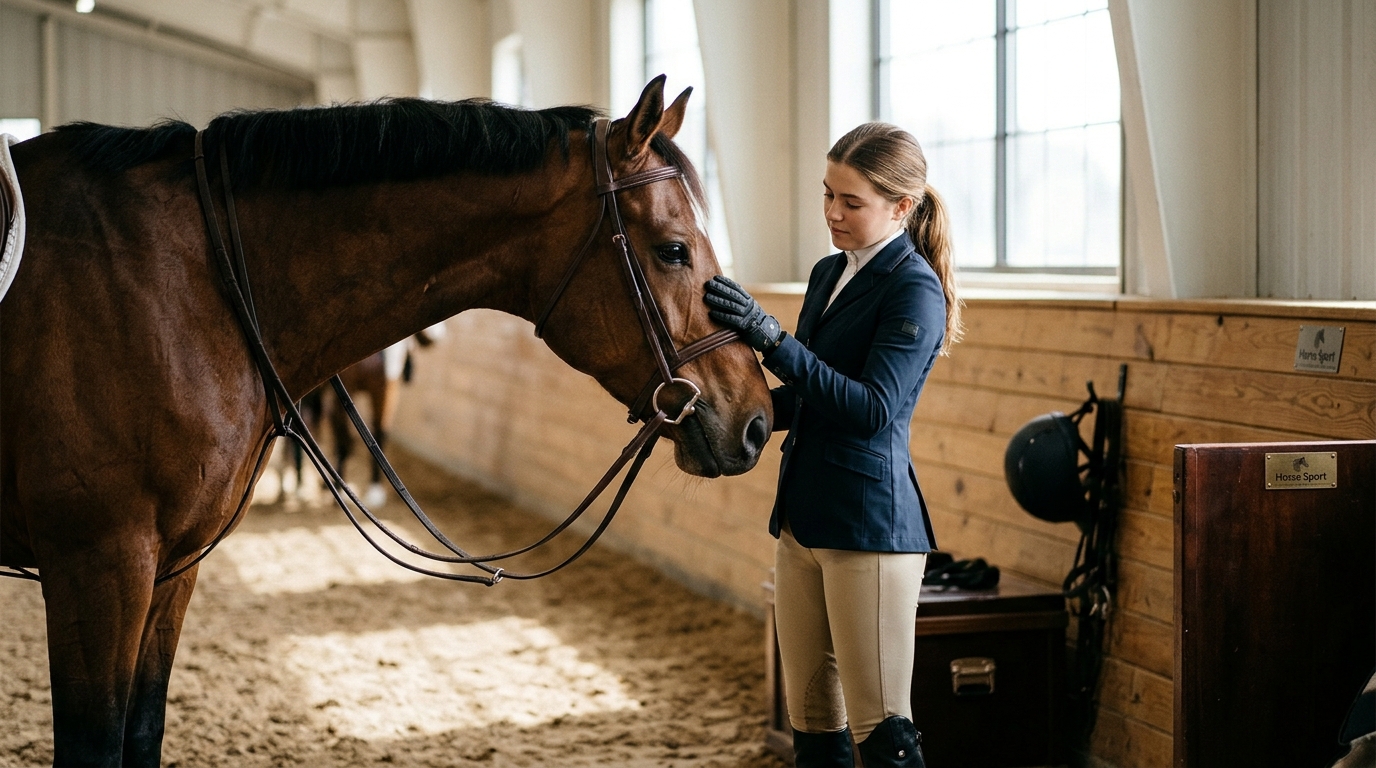
Beginners should understand basic anatomy, tack, and movement terms before their first lesson. Horse Sport provides these definitions to help new riders feel confident in the arena. Knowing these words allows you to follow instructor cues and communicate effectively with your horse.
Understanding Horse Anatomy
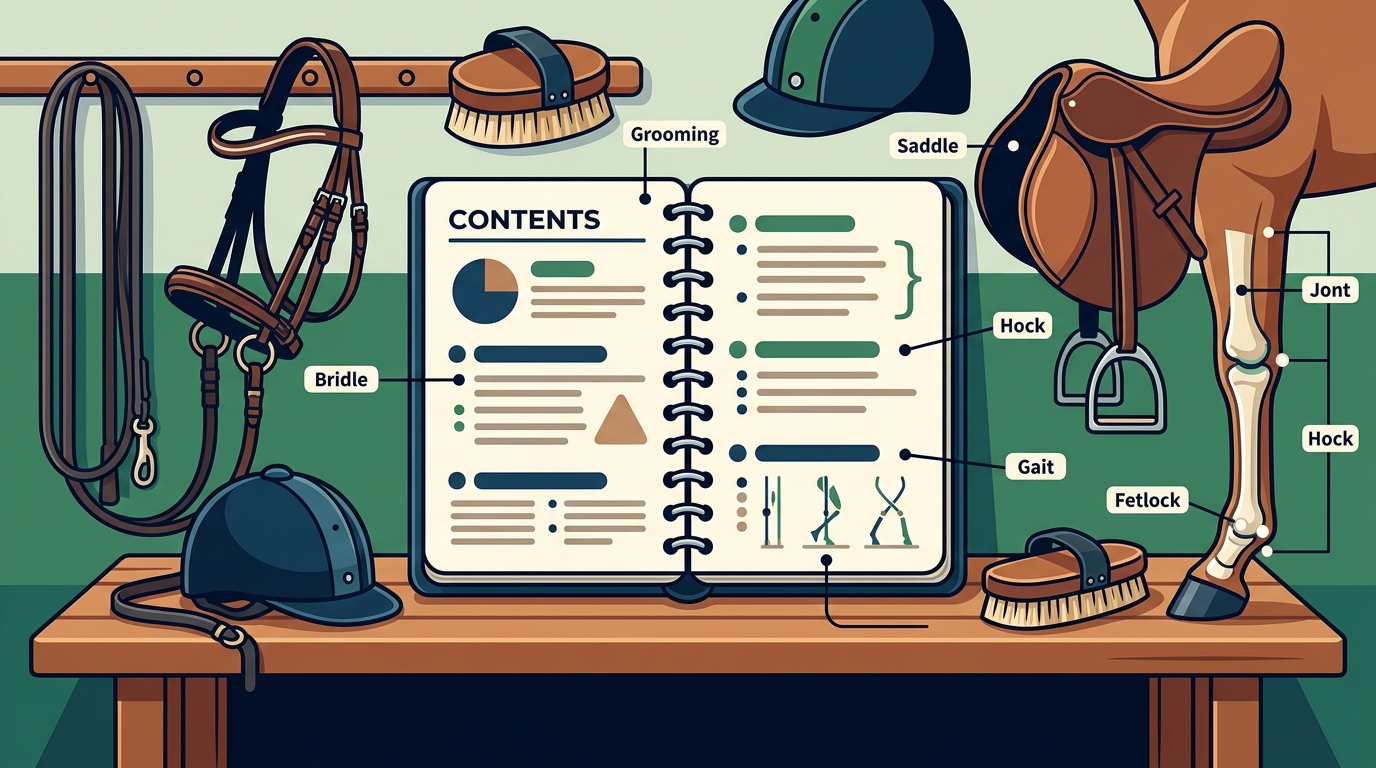
Knowing where to touch and what to call is the first step in building trust. Withers is the highest point of the horse's back, located between the shoulder blades. This landmark is critical for measuring saddle fit and determining the correct girth length. Chestnut is the hard, horny growth found on the inside of the front legs, just above the fetlock joint. While often mistaken for a growth, it is a normal anatomical feature that riders should not attempt to remove.
Essential Tack and Equipment
Understanding your gear prevents confusion during tacking up. A snaffle bit is a simple mouthpiece that applies direct pressure to the horse's mouth when the reins are used. It is the most common bit for beginners because it is mild and predictable. The girth is the strap that secures the saddle to the horse's body, passing under the barrel and over the chest. Ensuring the girth is snug but not too tight is a fundamental safety check before mounting.
Basic Movements and Gaits
Riders must distinguish between the three primary gaits to follow instructions. Trot is a two-beat diagonal gait where the horse moves in a bouncy rhythm, often requiring the rider to post. Canter is a three-beat gait that is faster than the trot but slower than the gallop, characterized by a specific lead. Understanding the difference between a left and right lead is essential for balance and control in the saddle.
Arena and Course Terminology
Navigation terms help you follow the instructor's path. The centerline is the imaginary line running down the middle of the arena, connecting the two long sides. Track refers to the path the horse follows around the perimeter of the arena. When an instructor says to 'stay on the track,' they mean to keep the horse moving along the outer edge, maintaining a consistent distance from the fence.
Key Takeaways
- Mastering basic anatomy terms like withers and chestnut helps with safety and communication.
- A snaffle bit is the standard beginner bit, applying direct pressure without leverage.
- The girth secures the saddle and must be checked for proper fit before every ride.
- Trot is a two-beat gait, while canter is a three-beat gait with a distinct lead.
- Knowing the centerline and track allows you to navigate the arena accurately.
- Using correct terminology builds confidence and respect between rider and instructor.
Frequently Asked Questions
What is the difference between a snaffle and a curb bit?
A snaffle bit applies direct pressure to the mouth, while a curb bit uses leverage to apply pressure to the mouth, chin, and poll. Beginners typically start with a snaffle.
Why is the withers important for saddle fit?
The withers are the highest point of the back. Saddle fit is measured from the withers to ensure the saddle sits correctly without pinching.
What does 'posting' mean in the trot?
Posting is the act of rising out of the saddle on the left diagonal and sitting back down on the right diagonal to absorb the bounce of the trot.
How do I know which lead my horse is on?
The lead is determined by which foreleg steps forward first. In a left lead, the left foreleg leads the movement.
What is the centerline in an arena?
The centerline is the imaginary line running down the middle of the arena, used as a reference point for movements and transitions.
Should I memorize all these terms before my first lesson?
You do not need to memorize every term, but understanding the basics of tack and gaits will help you follow instructions and feel more comfortable. Learn more: Contact Us 8211 Horse.