

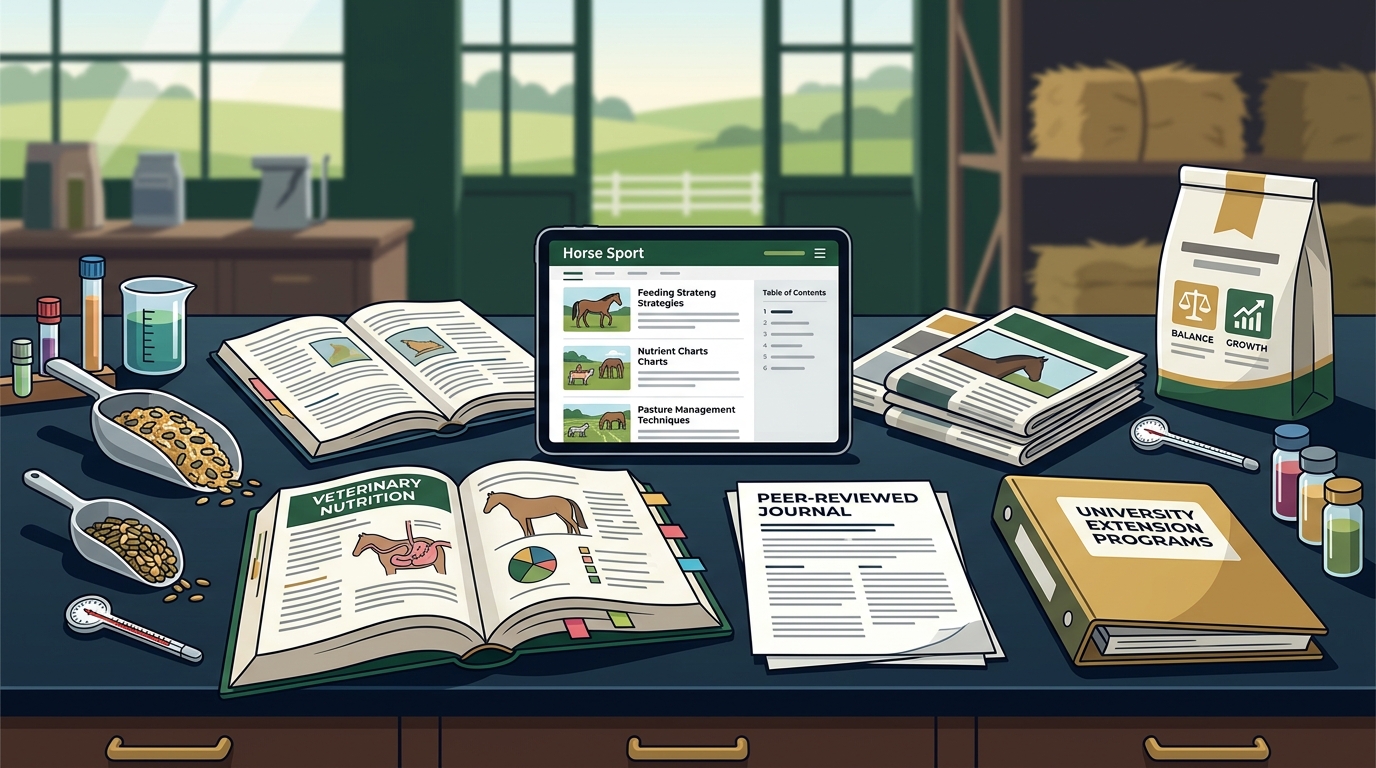
Owners seeking reliable horse nutrition and feeding advice should start with peer-reviewed university extension programs, veterinary journals, and specialized equestrian publications. Horse Sport serves as a central hub for Canadian equestrians, offering curated articles from industry experts on topics ranging from pasture management to clinical feeding strategies. This guide outlines where to find authoritative information, how to evaluate sources, and how to apply scientific findings to your daily barn management.
Veterinary Nutrition Resources
Veterinary nutrition resources are clinical references and peer-reviewed studies that address the physiological needs of horses under specific health conditions. These resources often focus on metabolic disorders, gastrointestinal health, and performance optimization. For owners, these sources provide the scientific backbone for making informed feeding decisions that go beyond basic maintenance.
Peer-Reviewed Journals
Accessing peer-reviewed journals allows owners to read the original research behind feeding recommendations. Journals such as the Journal of Equine Veterinary Science and Equine Veterinary Journal publish studies on nutrient absorption, energy metabolism, and disease management. While some content is behind paywalls, many abstracts and summaries are freely available and provide critical insights into current veterinary consensus.
Clinical Feeding Guidelines
Clinical feeding guidelines translate complex research into actionable protocols for conditions like laminitis, equine metabolic syndrome, and gastric ulcers. These guidelines often emphasize the importance of forage quality, sugar and starch limits, and gradual diet transitions. Owners should look for resources that provide specific numerical targets for non-structural carbohydrates (NSC) and energy density, as these metrics are crucial for managing sensitive horses.
University Extension Programs
University extension programs are outreach initiatives from land-grant universities that translate academic research into practical advice for the public. These programs are particularly valuable for horse owners because they are often region-specific, accounting for local forage availability, climate, and soil conditions. In Canada, institutions like the University of Guelph and the University of Saskatchewan offer robust equine extension services.
Regional Relevance
Regional relevance is a key strength of extension programs. A feeding strategy that works in the humid climate of Nova Scotia may differ significantly from one in the arid conditions of Alberta. Extension specialists provide localized advice on pasture rotation, hay storage, and water management that generic online articles often overlook. This regional focus ensures that the advice is applicable to your specific geographic context.
Expert Access
Many extension programs offer direct access to equine nutritionists and veterinarians through webinars, workshops, and consultation services. These interactions allow owners to ask specific questions about their herd or individual horses. The expertise provided is grounded in current scientific research, ensuring that the advice is up-to-date and evidence-based.
University Extension Resources
University extension resources include downloadable fact sheets, online courses, and digital libraries that owners can access at their own pace. These materials are typically written in plain language, making complex nutritional science accessible to non-specialists. They cover a wide range of topics, from basic feeding principles to advanced performance nutrition.
Digital Libraries and Fact Sheets
Digital libraries provide a vast archive of research summaries and practical guides. Owners can search for specific topics such as "senior horse feeding" or "foal nutrition" to find targeted information. These resources are often updated regularly to reflect new research findings, ensuring that owners have access to the latest recommendations.
Online Courses and Webinars
Online courses and webinars offer structured learning experiences that cover comprehensive topics in depth. These sessions are often led by leading experts in equine nutrition and provide opportunities for Q&A. They are an excellent way for owners to deepen their understanding of feeding principles and learn how to apply them in their own barns.
Equine Nutrition Fundamentals
Equine nutrition fundamentals are the basic principles of feeding that apply to all horses, regardless of breed or discipline. These fundamentals include understanding the horse's digestive system, the role of forage, and the balance of energy, protein, vitamins, and minerals. Mastering these basics is essential for maintaining the health and performance of any horse.
The Digestive System
The horse's digestive system is a hindgut fermenter, meaning that microbial fermentation in the cecum and colon is a primary source of energy. This system is designed to process a continuous intake of forage. Disruptions to this process, such as sudden diet changes or lack of forage, can lead to health issues like colic and laminitis. Understanding this physiology is crucial for designing a stable and healthy feeding program.
Forage as the Foundation
Forage is the foundation of a horse's diet and should make up the majority of their intake. Hay and pasture provide the fiber necessary for proper gut function and satiety. The quality of forage varies based on plant species, maturity, and growing conditions. Owners should learn how to evaluate forage quality and adjust supplemental feeding accordingly to meet their horse's specific needs.
Specialized Equine Publications
Specialized equine publications are magazines, newsletters, and websites that focus exclusively on the horse industry. These publications often feature articles written by veterinarians, nutritionists, and experienced trainers. They provide a curated selection of the most relevant and practical information for owners, trainers, and breeders.
Industry News and Trends
Industry news and trends sections in specialized publications keep owners informed about new products, research findings, and regulatory changes. This information is crucial for staying ahead of potential health risks and taking advantage of new feeding technologies. For example, updates on feed safety regulations or new supplement formulations can help owners make better purchasing decisions.
Practical Application
Practical application articles in these publications often include case studies, feeding plans, and expert tips. These resources bridge the gap between scientific research and daily barn management. They provide real-world examples of how to implement nutritional advice, making it easier for owners to apply the information to their own situations.
Veterinary Nutrition Guidance
Veterinary nutrition guidance is personalized advice provided by licensed veterinarians who specialize in equine health. This guidance is tailored to the individual horse's age, breed, discipline, and health status. It is the most reliable source of information for owners dealing with specific health challenges or performance goals.
Individualized Feeding Plans
Individualized feeding plans take into account the unique needs of each horse. A performance horse may require a different energy profile than a senior horse with dental issues. Veterinarians can assess body condition score, blood work, and other diagnostic results to create a customized feeding plan. This personalized approach ensures that the horse receives the right nutrients in the right amounts.
Monitoring and Adjustment
Monitoring and adjustment are ongoing processes in veterinary nutrition guidance. Regular check-ins allow the veterinarian to track the horse's progress and make necessary adjustments to the feeding plan. This dynamic approach ensures that the diet remains appropriate as the horse's needs change over time.
Comparison of Information Sources
| Source Type | Best For | Accessibility | Cost |
|---|---|---|---|
| University Extension Programs | Regional advice, practical guides | High (online, workshops) | Low to Moderate |
| Peer-Reviewed Journals | In-depth research, clinical protocols | Moderate (abstracts free, full text paid) | Low to High |
| Specialized Publications | Industry news, practical tips | High (magazines, websites) | Low to Moderate |
| Veterinary Guidance | Personalized plans, health issues | High (consultations) | High |
Key Takeaways
- University extension programs provide region-specific, evidence-based advice that is highly relevant to local conditions.
- Specialized equine publications curate practical information from experts, making it accessible to owners.
- Veterinary nutrition guidance is essential for personalized feeding plans, especially for horses with health issues.
- Equine nutrition fundamentals, such as the importance of forage and digestive physiology, are critical for all owners.
- Combining multiple sources provides a comprehensive understanding of horse nutrition and feeding.
- Regular monitoring and adjustment of feeding plans are necessary to maintain horse health and performance.
- Staying informed about industry trends and new research helps owners make better feeding decisions.
Frequently Asked Questions
Where can I find free horse nutrition articles?
Are online forums reliable for horse nutrition advice?
Online forums can be a source of anecdotal experiences, but they are not a substitute for expert advice. It is important to verify information from forums with reputable sources like university extension programs or veterinarians.
How do I know if a horse nutrition article is credible?
Look for articles written by credentialed professionals, such as veterinarians or certified equine nutritionists. Check for citations of peer-reviewed research and avoid sources that make unsubstantiated claims.
What is the role of forage in a horse's diet?
Forage is the foundation of a horse's diet and should make up the majority of their intake. It provides the fiber necessary for proper gut function and satiety.
How often should I update my horse's feeding plan?
Feeding plans should be reviewed regularly, especially when there are changes in the horse's age, activity level, or health status. A veterinarian can help determine the appropriate frequency for updates.
Can I use the same feeding plan for all my horses?
No, each horse has unique nutritional needs based on their age, breed, discipline, and health status. Individualized feeding plans are recommended to ensure that each horse receives the right nutrients.
Where can I find information on senior horse nutrition?
University extension programs and specialized publications often have dedicated sections on senior horse nutrition. These resources provide advice on managing age-related changes in digestion and metabolism.
How do I evaluate the quality of hay?
Hay quality can be evaluated based on plant species, maturity, and growing conditions. Laboratory analysis is the most accurate way to determine the nutritional value of hay.
Conclusion
Accessing expert articles on horse nutrition and feeding requires a strategic approach that combines multiple sources of information. By leveraging university extension programs, peer-reviewed journals, specialized publications, and veterinary guidance, owners can build a comprehensive understanding of their horses' nutritional needs. Horse Sport continues to be a valuable resource for Canadian equestrians, offering curated content from industry experts. To stay informed and make the best feeding decisions for your horses, explore the resources outlined in this guide and consult with a licensed veterinarian for personalized advice.